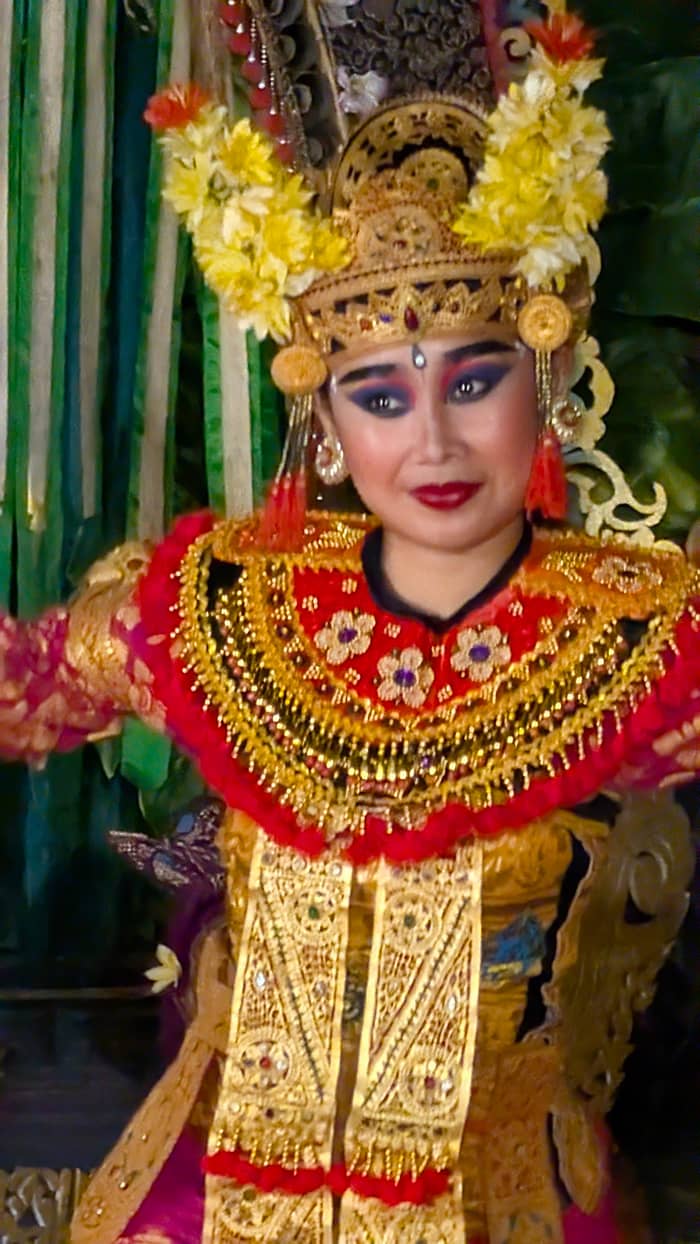
Court dance
Palace Legong evening
Courtyard, 7:30 PM
- Ticket fromfrom $6
- SoundGamelan orchestra
- RefundsNon-refundable
Show picker
Dance types in a nutshell
Balinese dance is a living tradition in three genres, sacred, semi-sacred and entertainment, and UNESCO inscribed it on its heritage list in 2015.
Genres and status
Two taps to your dance
Say when you are free and what you want to watch, and the matching Ubud ticket appears with its from-price.
Your Legong match
from $5
The listing starts the show at 9:30 in the morning.
Your Legong match
from $6
The show runs daily at 7:30 PM for about 90 minutes.
Your Legong match
from $6
The dance starts at 19:00 at the venue on your voucher.
Your Legong match
from $39
It runs about 6 hours with pickup included.
What is Balinese dance? A living tradition with sacred, semi-sacred and public forms, and in Ubud you can meet three of its best-known dances on three different nights. Start here to tell them apart.
Editorial team, legongdanceshow.com · Updated November 5, 2026 · About 6 min to read
Open with this
UNESCO describes traditional Balinese dances as performed by male and female dancers in costumes of brightly colored cloth painted with gold floral and faunal motifs, with gold-leafed and jeweled accessories.8 The dances combine a basic posture with the knees outward and the stomach held in, movements at different tempos, and facial expressions with eye movements that reveal happiness, sadness, anger, fear and love, all accompanied by gamelan.9,10
That list answers what is Balinese dance in a single sentence: a body language of posture, eyes and hands, carried by a bronze orchestra. UNESCO inscribed the tradition, under the title UNESCO listing of three Balinese dance genres, to the Representative List of the Intangible Cultural Heritage of Humanity in 2015.2
The learning is communal. In Balinese communities dances are mainly passed on informally to children from an early age, within groups.11 Balinese dance in Ubud feels rehearsed and natural at once, and that early learning inside a group is part of the picture.
The genres side by side
| Genre | Where it belongs | Examples the ministry names |
|---|---|---|
| Wali (sacred) | Religious ceremonies and rituals in temples only.12 | Rejang, Sanghyang Dedari, Baris Upacara.13 |
| Bebali (semi-sacred) | More flexible ritual use, often within ceremonies.14 | Topeng Sidhakarya, Gambuh, Wayang Wong.15 |
| Balih-balihan (public) | Public enjoyment, the stage and the courtyard.16 | Legong Kraton, Joged Bumbung, Barong Ket Kuntisraya.3 |
Genre names and examples come from the Indonesian tourism ministry's page on UNESCO's listing of Balinese dance.12,16
The Indonesian tourism ministry puts names on the three genres. Sacred dances, called Wali, are performed exclusively for religious ceremonies and rituals in temples; examples are Rejang, Sanghyang Dedari and Baris Upacara.12,13 They are offerings, not entertainment.
Semi-sacred dances, called Bebali, have more flexible ritual functions and often form part of traditional ceremonies.14 The ministry names Topeng Sidhakarya, Gambuh and Wayang Wong as examples.15 They sit between the temple and the stage.
The third genre, Balih-balihan, is intended for public enjoyment.16 The ministry's examples are Legong Kraton, Joged Bumbung and Barong Ket Kuntisraya.3 Nearly everything a visitor buys a ticket for falls in this group. Since 2010, nine dances of the three genres have been entered in the Bali Province inventory of intangible cultural heritage.17
How many have booked
Review counts as listed on each GetYourGuide record; a count tells you how many people booked and nothing about which dance is better.
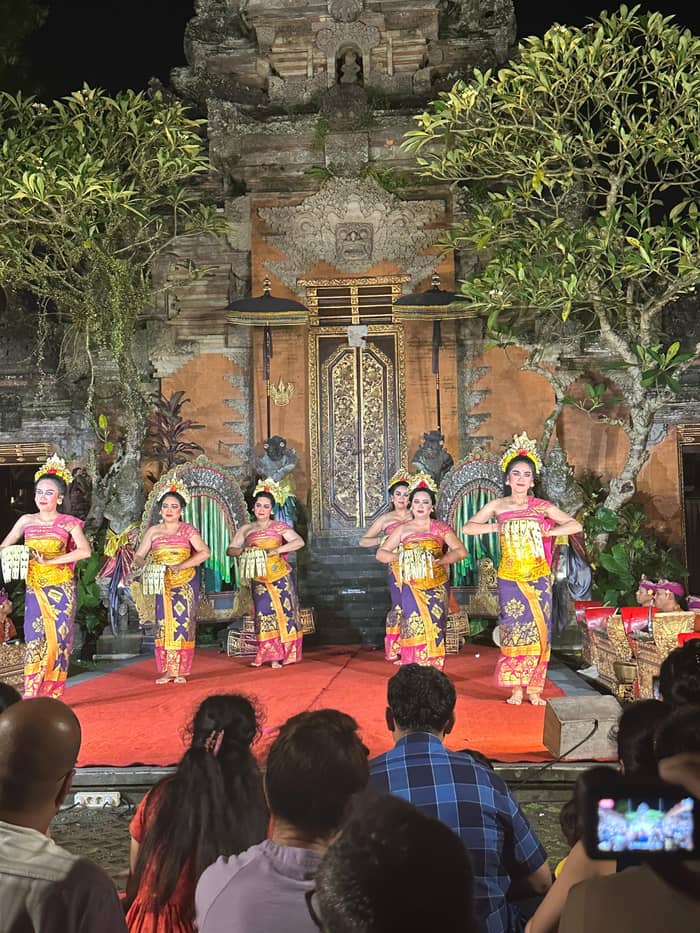
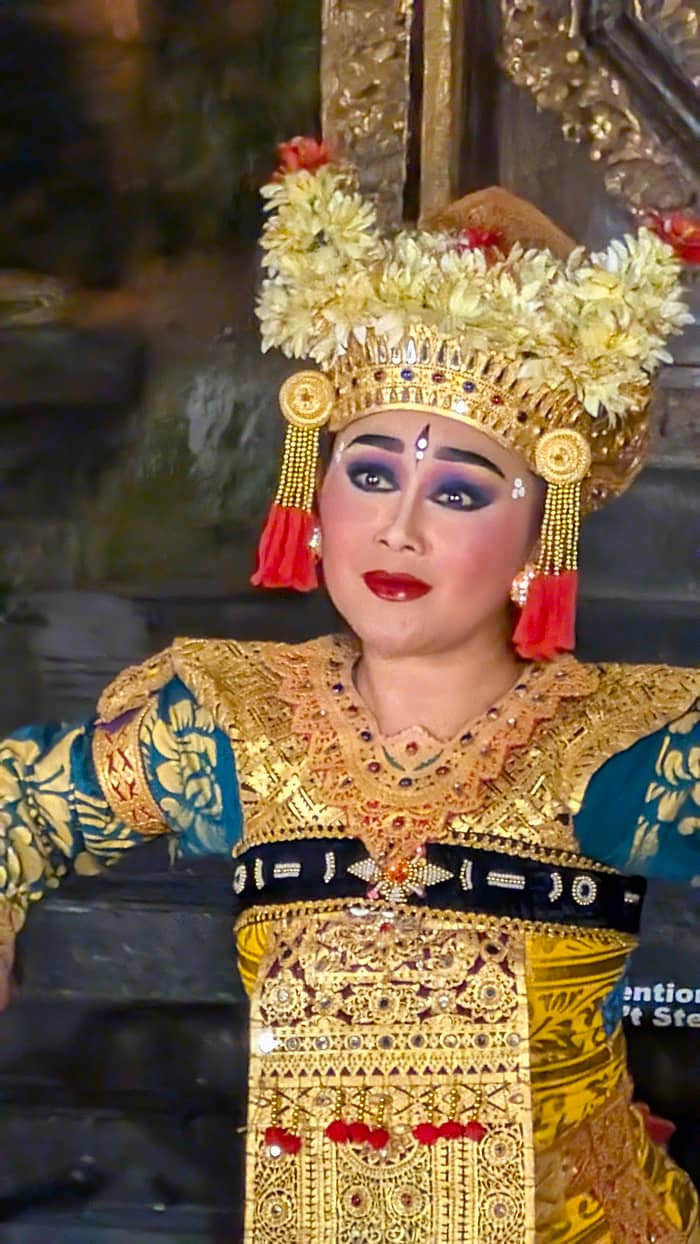
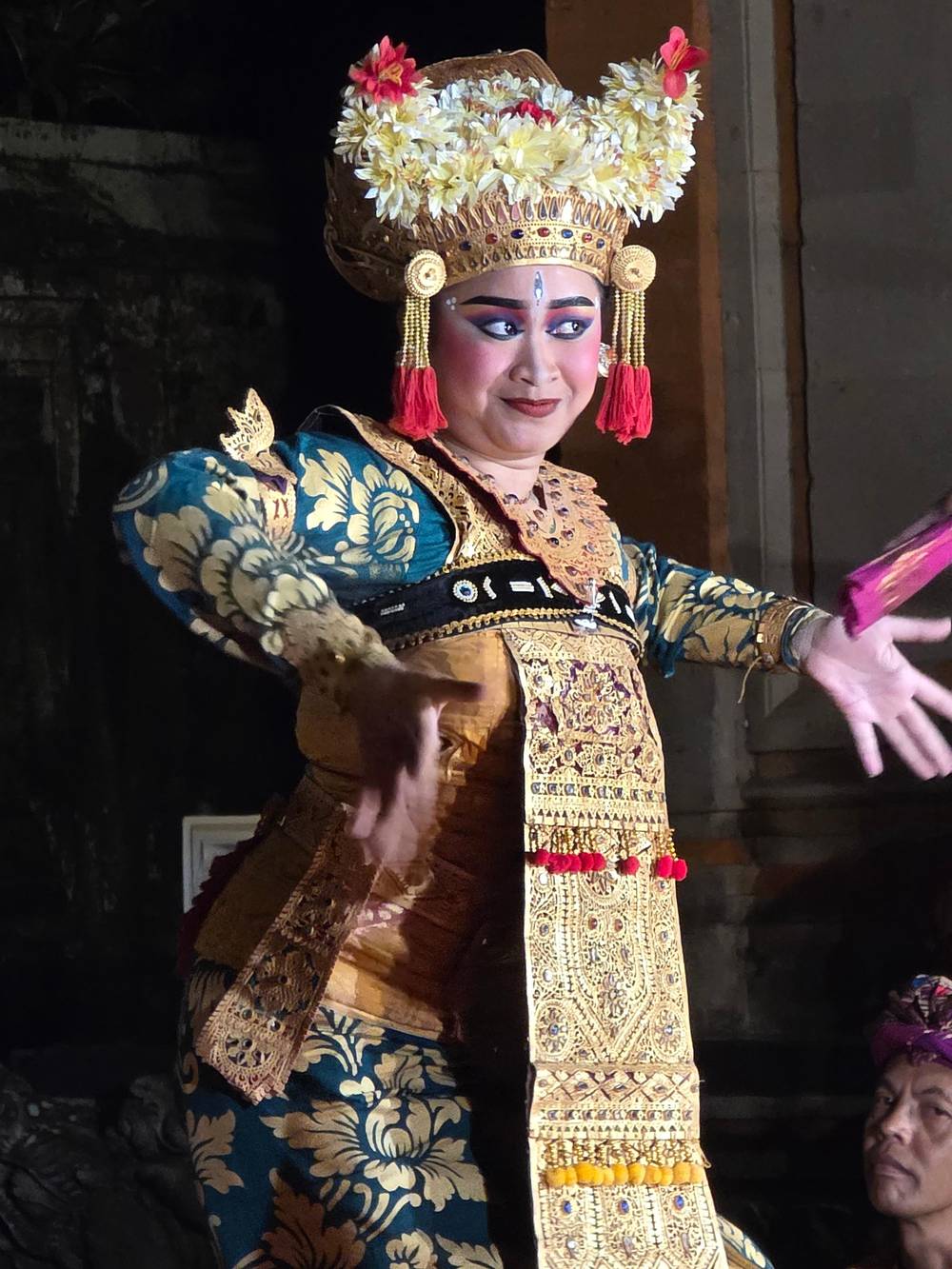
Legong balinese dance is the refined one. The ministry places its beginnings in the 17th or 18th century, in the age of Bali's royal courts, and describes dancers who use symbolic finger gestures and darting eyes under golden headdresses.18,19,20,21 A single Legong can last between 30 minutes and an hour.22
Legong draws on Balinese folklore and Hindu epics such as the Ramayana to tell of gods, heroes and legendary battles.23 The variant named for our ticket is Legong Kraton, which recounts the story of a king and his court.24 That palace link is why the tourism ministry calls the nightly Legong at Ubud Palace among the most authentic.25
If you want the full story of the movements, the costume and the evening at the palace, the Legong guide on this site goes deeper. For now, remember the contrast you will feel in the seat: Legong is exact and ornamental, where the next two dances are louder and more physical.
Three dances compared
Court dance
Courtyard, 7:30 PM
Chorus of men
Venue by weekday
Lion spirit
Early show
In the Barong dance, a lion-formed Barong is regarded as the King of the Spirits and represents virtue, while Rangda, the Queen of Demons, stands for the opposing side.6,7 The Barong is covered in thick white fur and adorned with gold jewelry and pieces of mirror, and two people dance in synchronized movements to portray him.26,27
In the Calon Arang drama, men fight with kris daggers and turn them on themselves when the Barong appears, and the performers fall into a trance.28 Balinese people believe each region has a protective spirit, and the Barong is modeled on a different animal in each region; Barong Ket, the lion, is the most common type and is found in almost every part of the island.29,30
The ministry says the most popular regular performances are given by villagers of Batu Bulan in Gianyar district, or at Kesiman in Denpasar.31 In the Ubud area, our listing check found a Barong and keris ticket for Pura Dalem Ubud or Seraya Budaya in Batubulan, starting at 9:30 in the morning.
One day, three dances
09:30
The Barong and keris ticket starts at 9:30, with an 8:30 AM pickup on the transfer option.
Midday
Dance happens at night and in the morning; the gap in between is yours.
18:00 to 19:30
The Ubud Kecak listing opens the stage gates between 18:00 and 19:30 at the venue on your voucher.
19:00
The chorus starts at 19:00, with the chanting and the torches.
19:30
Ubud Palace starts its show at 7:30 PM, so choose one of the two for the same night.
Later
Either evening ends in about an hour or about 90 minutes, depending on the show you chose.
Kecak stands apart: it has no gamelan and is accompanied only by the chanting of a chorus of men.5 The ministry says tens to hundreds of male dancers sit in a circle chanting "cak, cak, cak", and one of its pages gives the chorus as about 50 to 60 men around a set of torches.32,33 A soloist leads, indicating the high and low notes, and also narrates.34
The story is a shorter version of the Ramayana epic, and the dramatic scene shows Hanoman captured and put inside a circle of fire.35,36 The ministry says Kecak first appeared in 1930, when dancer Wayan Limbak and painter Walter Spies reworked the Sanghyang ritual with the Ramayana, and adds that it was initially developed for tourist performances.37,38
The ministry describes Kecak as an open-air performance staged around sunset, typically on a clifftop overlooking the sea, and names Pura Uluwatu as the best place to watch it, with Pura Dalem Ubud and Padang Tegal Stage on its list as well.39,40 In Ubud the evenings are shorter and nearer, with torches and a courtyard instead of a cliff.
Video
TravelVideoSource on YouTube · The video loads only after you press play.
Sacred dances, known as Wali, are performed exclusively for religious ceremonies and sacred rituals in temples.
Before any dance
For Legong, go to Ubud Palace. The tourism ministry says traditional Balinese dance is often staged in the palace courtyard every night, and our ticket lists a 7:30 PM show every day lasting around 90 minutes.4 Puri Agung Peliatan, a palace in Peliatan village, is also described as hosting performances such as Legong and gamelan.41
For Kecak, the Ubud listing we checked sells tickets for several venues, chosen by option and weekday, among them Sayan, ARMA, Peliatan Palace and Pura Dalem Kutuh Kaja. The venue gates stay open between 18:00 and 19:30 and the chorus begins at 19:00; the listing says to follow the venue printed on your voucher. Our schedule guide sets the weekdays out in a table.
For Barong, plan a morning. The listing we checked starts at 9:30 AM, and the pickup option collects guests at 8:30 AM. The dances can share one trip without clashing: Barong in the morning, then Kecak at 19:00 or Legong at 7:30 PM.
With a single evening, match the dance to the mood. Legong suits a seat in a courtyard and a taste for detail, with the daily 7:30 PM show from $6. Kecak suits a listener who wants a crowd of voices and torchlight, from $6. Barong suits an early riser who likes masks and a good story, from $5.
Mind the refund terms as well. The Legong ticket is listed as non-refundable, while the Kecak and Barong listings both allow free cancellation up to a day before the start, with a full refund. If your plans are still fluid, that difference may decide for you.
Whichever you pick, you are watching a living practice and not a museum piece. UNESCO's committee encouraged Indonesia to keep addressing possible threats from promoting Balinese dance festivities for tourists, a reminder to treat the performers as artists and ceremonies as theirs.42 The two-question chooser at the top of this page does the matching for you.
FAQ
The ministry mentions the nightly Legong at Ubud Palace, and our listing check found Kecak and Barong tickets for Ubud venues.25
That listing also names Seraya Budaya in Batubulan, and the show starts at 9:30 in the morning.
Starting prices are $6 for Legong, $6 for Kecak and $5 for Barong.
Sources
Keep reading
Unsure about seats, timing or the booklet? A person replies here.